How Security Teams Prepare for Emergencies at Events

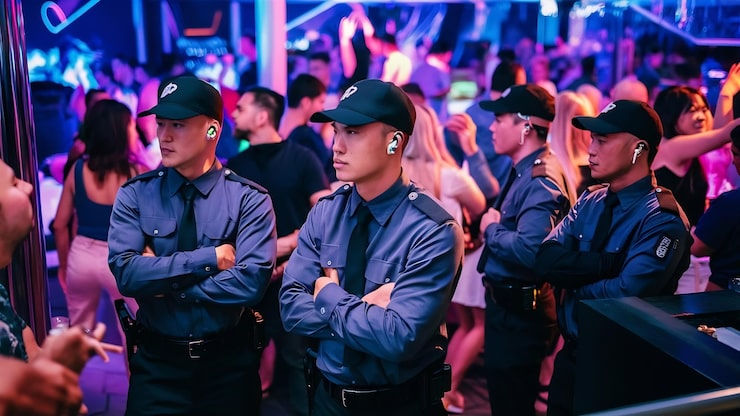
Security teams prepare for emergencies at events through layered planning that covers threat assessment, communication protocols, evacuation procedures, and real-time coordination. Before the event begins, teams conduct site walkthroughs, assign roles, and establish command structures.
During the event, they monitor crowd behaviour, manage access points, and maintain direct lines with emergency services to respond quickly when situations escalate.
Event security is not just about having guards on the ground. It is about building a system that can absorb disruption and respond without panic. Whether you are organising a corporate conference, a music festival, or a public exhibition, the difference between a manageable incident and a catastrophe often comes down to how well the security team prepared before the first guest arrived.
Why Emergency Preparedness Is Non-Negotiable at Events
Events bring together large numbers of people in unfamiliar environments, often with limited exit routes and unpredictable crowd dynamics. Event organisers in Singapore have a duty of care to attendees, which includes planning for foreseeable emergencies such as fire, medical incidents, crowd surges, and security threats.
Under Singapore's Public Order Act, organisers of large-scale public and private events must notify the Singapore Police Force in advance — generally at least 28 days before an event expecting more than 5,000 attendees, or 10,000 for private events. Events assessed as high-risk may be declared Special Event Areas, requiring organisers to work with the police to put additional security measures in place.
Fire safety obligations, including crowd capacity and emergency egress, fall under requirements enforced by the Singapore Civil Defence Force (SCDF). Failing to meet these standards puts not only attendees at risk but also exposes organisers to significant legal liability.
Step-by-Step: How Security Teams Build Their Emergency Plans
1. Pre-Event Risk Assessment
Everything starts with identifying what could go wrong. A thorough risk assessment considers the venue layout, expected crowd size, age profile of attendees, proximity to roads or water, weather conditions, and the nature of the event itself. High-profile events may also require threat intelligence from Singapore Police Force liaison officers, particularly for events assessed as Special Event Areas.
Security teams use this information to assign threat levels to different scenarios — from a minor medical emergency to a full evacuation. Each scenario gets its own response plan, resource requirement, and chain of command.
2. Site Mapping and Access Control Planning
Before the event, security managers walk the entire site with a focus on entry and exit points, bottlenecks, blind spots, and emergency vehicle access routes. This walkthrough directly informs where security personnel are posted, where barriers go, and which areas need additional camera coverage.
Access control is a critical layer. Controlling who gets in — and tracking how many people are inside at any given time — is essential for both safety and emergency response. Overcrowding is one of the leading contributors to crowd-related incidents at events in Singapore, particularly at venues with constrained access points such as Sentosa or Marina Bay.
3. Defining Roles and Communication Chains
A security team without a clear command structure will hesitate at the worst possible moment. Before the event, every team member must know exactly what their role is, who they report to, and what actions they are authorised to take independently.
Typical roles within an event security structure include:
Event Safety Officer — overall responsibility for safety decisions
Crowd Management Supervisor — monitors density and flow
Perimeter and Access Teams — control entry and prevent unauthorised access
Roving Response Officers — circulate through the crowd and respond to incidents
Control Room Operator — manages CCTV feeds and coordinates radio communications
Radio protocols matter as much as roles. Teams use pre-agreed codes and channels to prevent communication breakdowns in noisy environments. Backup communication methods — such as designated runner positions — are planned in advance for signal failure scenarios.
Evacuation Procedures: Planning the Exit Before You Plan the Entry
A well-designed evacuation plan accounts for speed, clarity, and crowd psychology. Security teams do not just point people toward the nearest exit — they actively manage the flow to prevent secondary incidents such as crushes or falls.
Key elements of a robust evacuation procedure include:
Clearly signposted emergency exits that are never obstructed
Designated assembly points that are away from emergency vehicle routes
Trained stewards positioned at intervals to guide crowd movement
Public address systems tested before doors open
Accessibility provisions for attendees with mobility limitations
Tabletop exercises and physical evacuation drills carried out before the event allow the team to test the plan under pressure. Any gaps in the procedure show up during rehearsal — not during an actual emergency.
Real-Time Coordination During an Emergency
Keep Calm And Trigger The Response
The first thing you want to avoid when there is an incident is creating a second crisis. An emergency call to a crowd without a clear, calm instruction typically creates panic. Skilled security teams are trained to use measured communication—to direct people without unnecessarily alarming them.
At the same time the inner response is initiated immediately. All team members will be alerted by the control room, the event safety officer will take command and the relevant emergency services will be contacted. In Singapore, this means working within frameworks set up with the Singapore Police Force, SCDF and other relevant agencies during the pre-event planning and licensing stage.
Liaison with Police, Ambulance and Fire Services
Professional event security teams don’t work in isolation. The best emergency responses occur when private security and statutory services have prepared working relationships ahead of the day.
This coordination usually takes place during the event licensing and approval process, when the event organizer liaises with the Singapore Police Force, SCDF and other relevant government agencies to review the safety and security plan. By having a designated liaison from the event security team who is in contact with these agencies during the event, response times are substantially reduced if something goes wrong.
Post-Incident Review: The Step Most Teams Skip
After every event, debriefings should be held, whether or not an incident has occurred. The security team reviews what worked, what didn’t, and what needs to be done differently. Near-misses are as important as actual incidents in improving plans for the future.
Post-incident documentation also aids in regulatory compliance and establishes a defensible record in the event of future legal questions. A good security team sees every event as a data point, not just a job well done.
What Event Organisers Should Expect from Their Security Provider
If you are hiring a professional security company, you should expect more than warm bodies at the door. A credible provider will:
Conduct a joint site visit well before the event date
Provide a written security and emergency plan specific to your event
Assign a dedicated on-site security manager with direct communication to you
Ensure all personnel hold valid licences from the Police Licensing and Regulatory Department (PLRD) under the Private Security Industry Act
Participate in relevant coordination meetings with the Singapore Police Force, SCDF, and other agencies as part of the event's licensing process
Deliver a post-event debrief and written report
These are not premium add-ons — they are baseline expectations for professional event security provision in Singapore.
Enfort Security works with event organizers and safety managers to create security frameworks that are practical, compliant and truly ready for the unexpected. From risk assessment to post-event debrief, a professional approach to emergency planning makes the difference between a smooth event and one that makes the news for the wrong reasons. Learn more about the full range of Enfort Security’s services by visiting their homepage.
Frequently Asked Questions
What does event security emergency planning involve?
It involves pre-event risk assessments, defined roles and communication chains, evacuation route planning, and coordination with local emergency services. Teams prepare written plans, conduct drills, and establish command structures so every person on-site knows exactly what to do when an incident occurs.
How do security teams manage crowd evacuations?
Security teams manage evacuations by positioning trained stewards at key points, using public address systems to issue calm and clear instructions, and directing crowd flow toward pre-designated assembly points. Evacuation routes are mapped during pre-event site walks and tested through drills before the event opens.
Do event security teams work with police and emergency services?
Yes. Professional security teams coordinate with the Singapore Police Force, SCDF, and other relevant agencies through the event licensing and safety planning process. A designated liaison from the security team maintains communication with these agencies on the day, ensuring a unified and faster response if an emergency arises.
What should event organisers ask a security company before hiring them?
Ask whether they will conduct a site visit, provide a written emergency plan, assign a named on-site security manager, and participate in relevant licensing coordination with the Singapore Police Force and SCDF. Also confirm that all staff hold valid PLRD licences and that a post-event debrief and written report are included in the service.


Comments